
Blog/Investment Banking
M&A Management Presentations: Critical Questions to Ask
Mergers and acquisitions (M&A) are significant turning points for companies, often altering the landscape of entire industries. As companies seek to grow, diversify or simply survive shifting market dynamics, M&A management presentations become a crucial tool in guiding investment decisions.
But what separates a successful acquisition from a costly misstep? It often comes down to asking the right questions. A thorough evaluation can help uncover hidden risks and opportunities that might otherwise go unnoticed.
This post covers the key questions that should be at the forefront during due diligence and beyond. Whether you’re an investor looking for clues on financial performance analysis or an executive keen on assessing synergy opportunities between organizations, this guide will help you elevate your approach toward M&A management presentations.
Let’s dive into what you need to know before sealing any deal!
Understanding M&A Management Presentations
M&A management presentations are an essential step in the acquisition process. They serve as a platform for companies to present their value proposition and articulate why they are an attractive investment.
These presentations typically highlight financial performance, growth potential, and operational efficiency. The goal is to inspire confidence among potential investors or buyers. Visual aids, data analytics, and compelling narratives play crucial roles in conveying this information.
Clarity is key as stakeholders need concise insights into market dynamics and competitive positioning. A well-structured presentation can therefore significantly impact investment decision-making processes.
Understanding the nuances of these sessions allows participants to gauge future synergies and cultural alignment between organizations. It’s also an opportunity to address questions around risk assessment and integration planning directly from leadership capabilities within both teams involved in the transaction.
Essential Questions for M&A Due Diligence
Due diligence is the backbone of any successful M&A transaction. Asking the right questions during this phase can help identify potential risks and opportunities.
- Financial Health: What do the target’s financial statements reveal? Are there any red flags, such as revenue inconsistencies or undisclosed liabilities?
- Legal Standing: Are there ongoing lawsuits or regulatory concerns that could impact operations?
- Market Position: How does the company stack up against competitors? What are its growth prospects?
- Cultural Fit: Will the teams integrate smoothly post-acquisition?
- Operational Metrics: What key performance indicators (KPIs) will drive success after the acquisition?
Each of these questions helps paint a comprehensive picture of the target company’s viability and long-term potential.
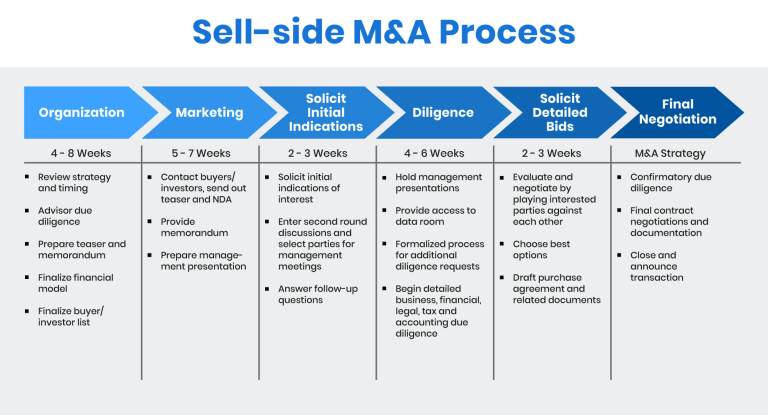
Sell-side M&A Process [Source: Dealroom]
Identifying M&A Red Flags
Identifying M&A red flags is crucial for successful acquisition strategy. It’s essential to be vigilant and proactive during the evaluation process.
Look for inconsistencies in financial performance analysis. Discrepancies in reported earnings or cash flow can indicate deeper issues. Unexplained fluctuations often signal that something might be amiss.
Cultural alignment also plays a significant role. A mismatch between company cultures can lead to integration challenges down the line. Observing employee satisfaction and turnover rates offers valuable insights into potential problems.
Pay attention to leadership capabilities as well. Frequent changes in management or departures of key personnel may raise concerns about stability and direction.
Assess market dynamics carefully. If an industry shows signs of decline or increased competition, it’s vital to understand how that impacts growth potential before moving forward with any deal negotiation.
Evaluating the Deal: Key Questions
When assessing a potential acquisition, focus on these key elements:
- Deal Structure: Does the proposed structure align with your strategic goals?
- Synergy Opportunities: Are there cost savings or revenue enhancements to be realized?
- Competitive Advantage: Will this acquisition improve market positioning?
- Integration Strategy: What steps are needed to ensure a smooth transition?
By addressing these aspects, stakeholders can better understand the potential benefits and challenges of the deal.
Assessing the Management Team
Assessing the management team is crucial in M&A management presentations. The leadership’s capability can make or break a deal. A strong team with proven experience often signals stability and potential for success.
Start by examining their track record. Look into previous integrations and growth performance under their guidance. Did they achieve milestones consistently?
Evaluate their strategic vision as well. Are they aligned with your company’s goals? Cultural alignment is key to ensuring smooth transitions post-acquisition.
Engage with them directly during presentations. Their communication skills reveal how effectively they convey ideas and motivate teams.
Consider also the team’s adaptability to market dynamics. Can they pivot when necessary? This flexibility plays a significant role in navigating challenges that arise during integration phases.
Assess the overall morale of the management team. Happy, engaged leaders inspire confidence throughout the organization, which enhances long-term value creation.
This analysis is crucial for an investor as he/she might want to keep the management team in place post-acquisition. This will also be relevant in terms of growth prospects as a management team with strong culture and values is more likely to represent a better company.
Analyzing Strategic Fit and Synergy Opportunities
When analyzing strategic fit in M&A management presentations, it’s crucial to align the goals of both companies. Look for complementary strengths and shared visions that can enhance overall performance.
Synergy opportunities often emerge from cost savings or revenue enhancements. Delve into how each company’s resources can be leveraged together. This could mean combining technologies, sharing customer bases, or even streamlining operations.
Evaluating cultural alignment is equally important. A misalignment here can jeopardize potential gains. Assessing employee compatibility fosters smoother integration and retention post-acquisition.
Don’t overlook market dynamics as well; understanding industry trends helps gauge growth potential. Whether it’s tapping into new markets or enhancing competitive positioning, the right synergies unlock shareholder value.
At last, examine financial projections carefully to ensure these opportunities are realistic and achievable within your acquisition strategy framework.
Conducting Operational Due Diligence
Operational due diligence is a vital component of the M&A process. It goes beyond financial metrics and delves into how a target company operates on a daily basis.
Start by assessing key performance indicators (KPIs) that reflect operational efficiency. Look for gaps in processes or areas where improvement is needed. Understanding workflows can reveal potential risks that might impact future profitability.
Evaluate supply chain dynamics as well as they can significantly influence cost structures and delivery timelines. Are there dependencies on specific vendors?
Moreover, examine the technology infrastructure in place. Is it scalable? Does it align with your acquisition strategy?
Don’t forget to consider cultural alignment between organizations, as this directly impacts employee engagement and retention post-acquisition. Gathering insights from various departments will provide a comprehensive view of operational health and readiness for integration challenges ahead.

Business Due Diligence Process [Source: India Filings]
Risk Assessment and Integration Planning
Risk assessment is also a critical component of any M&A management presentation. It helps identify potential pitfalls that could derail the integration process. Understanding these risks allows for proactive measures to mitigate them before they escalate.
Integration planning should align with both organizations’ strategic goals. This ensures that the merger or acquisition maximizes shareholder value while minimizing disruption. A well-thought-out plan addresses cultural alignment, operational efficiencies, and resource allocation.
Consideration of market dynamics is essential during this phase. Evaluate how external factors might influence your integration efforts and adjust accordingly.
Furthermore, engage key stakeholders early in the process to gather insights on possible challenges ahead. Their perspectives can illuminate blind spots you may not have considered otherwise.
Employing robust financial projections will help gauge the success of your integration strategy over time, ensuring ongoing evaluation against established KPIs leads to informed decision-making throughout the journey.
Conclusion
M&A management presentations play a pivotal role in the acquisition process. These presentations provide insight into potential deals, helping stakeholders navigate complex decisions. By asking the right questions during M&A due diligence, companies can uncover hidden risks and opportunities.
Identifying red flags early on can save time and resources while enhancing deal evaluation processes. A thorough assessment of the management team is vital; their capabilities often determine success or failure post-acquisition. Moreover, analyzing strategic fit and synergy opportunities can lead to greater shareholder value.
Operational due diligence ensures that all aspects of a target company are scrutinized carefully, from financial performance analysis to cultural alignment. Risk assessment should be an ongoing part of integration planning to ensure seamless transitions.
By focusing on these areas with clear objectives in mind, organizations increase their chances of making informed investment decisions that align with long-term growth potential and competitive positioning within the market dynamics at play today. Leveraging M&A best practices will empower businesses not just to survive but thrive in an ever-evolving landscape.
P.S. As always, don’t forget to check my Premium Resources for more tools and materials that will help you break into the industry!
Sources

